 RGRR Internship Hub×
- +

RGRR Internship Hub
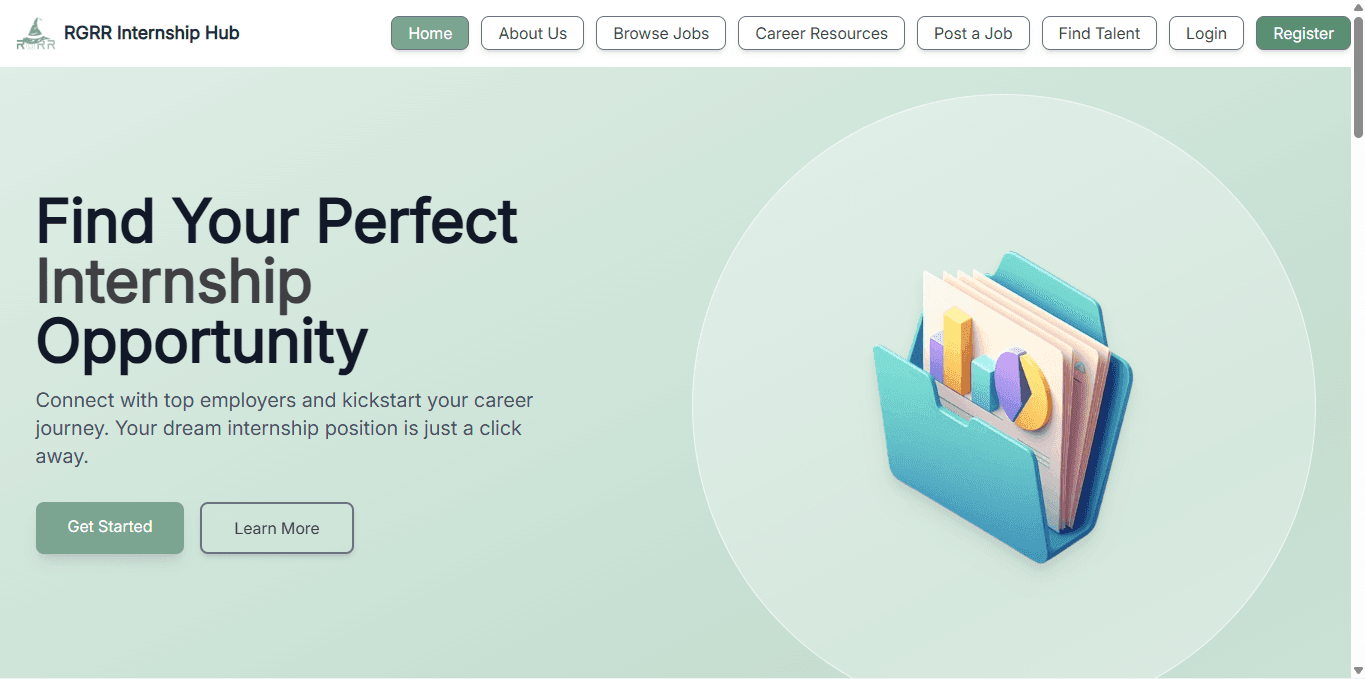
A web-based Student Internship Finder System developed for RGRR Webmaker to streamline the internship application process between students and the company.
Students can browse available internship opportunities, view detailed job descriptions, and submit applications through a clean interface. Administrators manage job postings, review applicants, and maintain records — connecting students directly with real industry experience.
Overview
Type
Frontend Developer
Status
Completed – Localhost
Users
Internship Project – RGRR Webmaker
The Problem
What problem?
RGRR Webmaker had no centralized platform for managing internship listings and student applications, forcing staff to handle inquiries and records manually.
Why build it?
As application volume grew, the absence of a structured system led to missed applicants, inconsistent records, and a frustrating experience for students trying to find and apply for internships at the company.
The Solution
What was built?
A full-stack internship management system with two distinct user roles: Students who can browse listings and submit applications, and Administrators who manage job postings, review applicants, and maintain hiring records.
How it works
Built with Laravel and MySQL, the system provides a role-based access structure where admins control the full posting and applicant pipeline, while students get a clean, self-service application flow with no overlap in permissions.
My Role
Frontend Developer
- →Frontend developer responsible for UI implementation
- →Built the job listings interface and applicant-facing views
- →Integrated the applicant profile and application management module
- →Contributed to system design and feature scope definition
Process & Thinking
How I approached it
Collaborated with the team during initial planning to define the system scope, user roles, and core features, then focused on frontend implementation for the student-facing side of the platform.
Why this approach?
Chose a role-separated architecture so the student application flow and admin management panel could be developed and maintained independently, reducing the risk of permission conflicts as features were added.
Key Insight
💡 Realized early that the biggest UX challenge wasn't the admin side — it was making the student application flow feel simple and trustworthy. Students needed to know their application was received and what happens next, which pushed us to prioritize clear status feedback throughout the process.
Tech Stack
Key Decisions
·Adopted a role-based access control model to cleanly separate Student and Administrator permissions without overlap.
·Used a relational database to maintain structured records for job listings, applicant data, and application status with referential integrity.
·Designed the admin dashboard as a centralized management layer, giving administrators full control over postings and applicant pipeline without exposing student-facing routes.
Architecture
No diagram provided
Features
Internship Listings
Students can browse all available internship opportunities posted by the Employer, with details on role requirements, responsibilities, and how to apply.
Application Submission
Students can submit internship applications directly through the platform, with a straightforward form and confirmation feedback on successful submission.
Job Posting Management
Administrators can create, update, and remove internship job postings keeping listings accurate and relevant for prospective applicants.
Applicant Tracking
Administrators can review submitted applications, track applicant status across hiring stages, and manage the full recruitment pipeline from one dashboard.
Challenges & Learnings
Challenge
Defining clean permission boundaries between the Student and Administrator roles without creating access gaps or route conflicts.
Learning
Enforced role-based access at the backend level rather than relying solely on UI guards, ensuring students could never reach admin-managed data regardless of how requests were made.
Challenge
Making the application submission flow feel straightforward for students who may have no prior experience with formal application systems.
Learning
Simplified the form structure and added clear status indicators so students always knew whether their application was submitted successfully and what to expect next.
Challenge
Keeping the admin pipeline organized as multiple applicants submitted for the same listing simultaneously.
Learning
Implemented a status-based tracking model with defined stages — Pending, Reviewed, Accepted, Rejected — giving admins a clear overview of where each applicant stood at any point.
Results & Outcome
Deployment
Completed – Localhost
Users
Internship Project – RGRR Webmaker